In nearly all cases, you should avoid drinking alcohol while taking anxiety medication. Some combinations, especially benzodiazepines and alcohol, can slow breathing to dangerous levels or prove fatal. If you or someone else shows severe drowsiness, confusion, or trouble breathing after mixing the two, call 911 immediately. The rest of this guide breaks down the risk by drug class and explains how to talk to your prescriber about it.
TL;DR:
- Combining alcohol with benzodiazepines can cause life-threatening respiratory depression, requiring complete abstinence during treatment.
- Drinking alcohol during SSRIs or SNRIs increases side effects and impairs sleep, complicating treatment assessment and risking mood instability.
- It is safest to wait at least four to six weeks after starting or changing a dose before consuming alcohol, and never skip doses to drink.
- Severe symptoms such as difficulty breathing or unresponsiveness after mixing substances require immediate emergency response.
- Full disclosure of alcohol use to your prescriber allows for personalized safety plans and minimizes overdose or adverse event risks.
Alcohol is a central nervous system depressant, and so are most anxiety medications. Combine two depressants and you don’t just add their effects. You compound them, often unpredictably, which is why clinicians recommend avoiding alcohol altogether while on these prescriptions.
There’s a subtler problem too. Alcohol wrecks sleep architecture. It might knock you out faster, but it fragments deep sleep and REM cycles, which is exactly the sleep quality anxiety treatment depends on to work. Wake up at 3 a.m. with your heart racing after a few drinks, and that’s not a coincidence. It’s alcohol metabolizing out of your system and rebound anxiety kicking in right behind it.
Perhaps the most practical issue is that alcohol can negate the benefits your medication is supposed to deliver. If you’re drinking regularly while adjusting to a new SSRI or benzodiazepine, your prescriber has no clean signal to work with. Is the medication not working, or is alcohol masking or amplifying its effects? Nobody can tell, and that uncertainty can drag out your treatment timeline by months.
A few mechanisms drive this:
Pro Tip: If you’ve had a rough night’s sleep after drinking and feel more anxious the next day, that’s not your underlying condition getting worse. It’s usually alcohol rebound. Give it 48 hours before you judge your baseline anxiety level.
Reviews of co-use between alcohol and sedative medications consistently describe additive central nervous system depression and a measurably higher risk of adverse outcomes, including overdose. That risk isn’t evenly distributed across every anxiety drug, though. Some classes tolerate an occasional drink far worse than others.
Not every anxiety medication carries the same danger when alcohol enters the picture. The gap between “risky” and “potentially lethal” often comes down to which class you’re on.
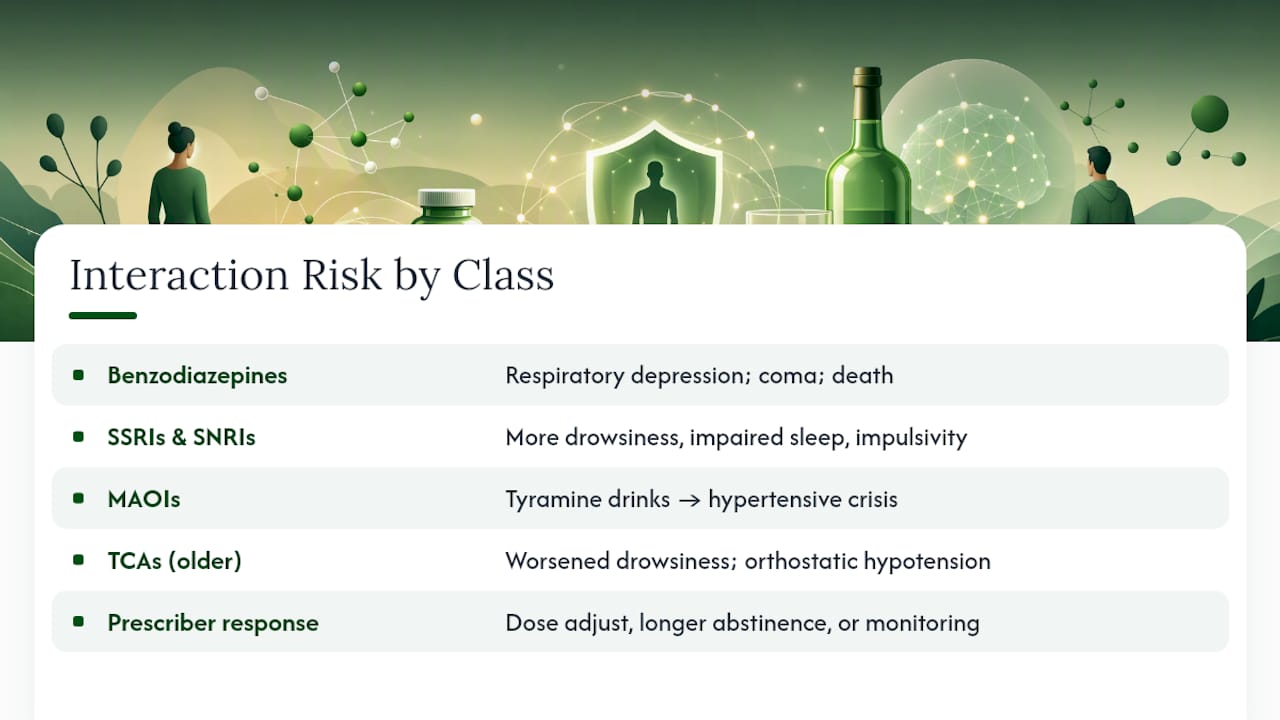
Benzodiazepines (alprazolam, clonazepam, lorazepam, diazepam) carry the sharpest risk. These drugs and alcohol both depress breathing and heart rate through overlapping pathways in the brain, and combining them can cause severe impairment, slowed heart rate, respiratory depression, coma, or death. If you’re on a short-term benzodiazepine prescription, the honest answer is: don’t drink at all during that course. Doctors treat this combination with the same seriousness as opioid-alcohol interactions, and for good reason.
SSRIs and SNRIs (escitalopram, sertraline, venlafaxine) are less immediately dangerous but far from harmless. Alcohol can intensify side effects like drowsiness, dizziness, and nausea, and it interferes with sleep in ways that mimic or worsen the anxiety you’re treating. There’s also a behavioral angle worth naming: alcohol lowers inhibition, and mixing it with medications that affect serotonin can lead to impulsivity or mood swings that feel out of character. Beyond the physical risk, alcohol prevents your prescriber from getting a clean read on whether the medication is actually working.
MAOIs (an older class, still prescribed in specific cases) come with a strict dietary rule most patients don’t expect: certain alcoholic drinks contain tyramine, and combining tyramine-rich beverages with MAOIs can trigger a sudden, dangerous spike in blood pressure known as a hypertensive crisis. Tap beers and certain wines are common culprits. If you’re on an MAOI, your prescriber should have already walked you through a full dietary restriction list. Follow it to the letter.
TCAs and other older anxiolytics amplify drowsiness and orthostatic hypotension, the sudden blood pressure drop that happens when you stand up too fast. Combined with alcohol, that dizziness gets worse, and the risk of an accidental overdose rises because these drugs have a narrower safety margin than newer alternatives.
In practice, a prescriber who learns a patient drinks socially will usually do one of three things: adjust the dose, extend the abstinence window during titration, or add closer monitoring, like more frequent check-ins during the first few weeks. What they won’t do is ignore it, so don’t hide it.
The first few weeks on a new anxiety medication or after a dose change are the highest-stakes window for alcohol interactions, because that’s when your prescriber is trying to figure out if the dose is right.
Skipping a dose feels like the responsible move before a night out. Clinically, it’s often the opposite. Patients who skip doses to drink socially tend to destabilize their treatment, and many don’t resume their regular schedule afterward, which raises relapse risk far more than one drink would have.
Certain symptoms after mixing alcohol with anxiety medication mean you stop waiting and act.
If you see any of these, call 911 immediately, keep the person’s airway clear, and place them in the recovery position if they’re breathing on their own. Tell responders exactly what substances were taken, including any opioids, since combining opioids with benzodiazepines and alcohol raises the danger sharply and changes how EMS responds. Any overdose or near-miss needs a follow-up medical review afterward, not just a “sleep it off” recovery.
Anxiety treatment works better when your prescriber knows the full picture, including how often you drink. FitRx builds that conversation into care from day one rather than leaving it as an afterthought.
| What you get | Why it matters |
|---|---|
| Alcohol-use screening at intake | Shapes which medication and dose fit your actual lifestyle |
| Continuous app monitoring | Catches side effects before they become emergencies |
| Licensed provider access | Gives you someone to ask before, not after, a night out |
Patients hide their drinking from prescribers more often than you’d think, usually out of embarrassment. That instinct backfires. A prescriber who knows you drink two glasses of wine on weekends can build a plan around it. One who doesn’t know is flying blind, and so are you.
The safest path isn’t perfection. It’s disclosure. Tell your provider what you actually drink, not what you think you should be drinking, and let them adjust the plan accordingly. If you’re ever unsure whether a dose and a drink are compatible, the answer is to ask before, not after.
— Bryan
FitRx gives you a faster path to the answer than searching symptoms and hoping for the best: a licensed clinician who reviews your alcohol use alongside your anxiety symptoms and builds a medication plan that accounts for both from the start.

Getting started takes three steps, including following practical aftercare steps after drinking that support your anxiety treatment and recovery. You schedule an online visit, complete an assessment that covers your symptoms, health history, and alcohol use, and receive a personalized safety plan along with a prescription if one is appropriate. Follow-up happens through the FitRx app, so if something feels off after a dose change, you’re not waiting weeks for a callback. If you’re currently taking anxiety medication and want a clearer, safer plan around your drinking habits, visit FitRx’s anxiety care page to schedule an assessment with a licensed provider.
This article is general information, not a substitute for advice from a qualified doctor. Consult a qualified healthcare professional about your own circumstances before acting on anything here.
None are fully “safe” to mix with alcohol, but the risk varies. Benzodiazepines carry the highest danger of severe sedation and breathing problems, while SSRIs and SNRIs carry lower but still real risks to sleep, side effects, and treatment assessment.
Expect intensified drowsiness, dizziness, nausea, impaired coordination, and disrupted sleep. With benzodiazepines specifically, the combination can escalate to dangerous respiratory depression.
There’s no universal number since it depends on the drug, your dose, and how much you drank. General guidance suggests waiting several hours after moderate drinking, but you should confirm the specific window with your prescriber.
Occasional light drinking on SSRIs like Lexapro (escitalopram) carries lower acute risk than with benzodiazepines, but it can still worsen side effects and disrupt sleep, and it’s best avoided during the first 4 to 6 weeks of treatment or after a dose change.

.svg)