Nutrition is the single most modifiable driver of energy intake, and choosing a sustainable eating plan that creates an appropriate calorie deficit is the most direct path to losing weight and keeping it off. According to NIDDK, the key is not a perfect diet but a healthy eating plan you can actually maintain. Clinical benchmarks give you a concrete starting point: aim for 1–2 lb per week and a 5–10% reduction in body weight within roughly six months.
Three things you can do today:
The proximate mechanism is energy balance: your body weight changes when calories consumed consistently exceed or fall short of calories burned. But that framing, while accurate, undersells the complexity. What you eat shapes how hungry you get, which in turn shapes how much you eat.
Protein and fiber are the two most powerful satiety levers. High-protein meals raise levels of peptide YY and GLP-1, hormones that signal fullness, while suppressing ghrelin, the hormone that drives hunger. Fiber slows gastric emptying, which extends the feeling of fullness after a meal. Ultra-processed foods, by contrast, are engineered to be easy to eat quickly and in large amounts, which overrides normal satiety signals before the brain registers fullness.
Four causal pathways linking nutrition to weight change:
That last point deserves emphasis. Metabolic adaptation is not a personal failure. It is a documented physiological response, and understanding it changes how you plan for maintenance rather than treating regain as a surprise.
Calorie deficit in practice: A registered dietitian at Harvard-affiliated Massachusetts General Hospital typically recommends starting with a 500-calorie daily deficit, which produces roughly 1 lb of loss per week while preserving muscle mass.
The 2020–2025 Dietary Guidelines and NIDDK guidance translate the science into specific, measurable targets. These are not aspirational suggestions; they are the benchmarks clinicians use to evaluate progress.
Nutrient limits from the Dietary Guidelines:
The positive side of the pattern is equally specific: nutrient-dense foods including vegetables, fruits, whole grains, lean protein, low-fat or fat-free dairy, and healthy fats form the foundation. The CDC explicitly cautions against eliminating entire food categories because doing so tends to reduce both nutrient adequacy and long-term adherence.
Weight-loss timeline and clinical targets:
| Timeframe | Target | What it means in practice |
|---|---|---|
| Weekly | 1–2 lb loss | A 500–1,000 calorie daily deficit through food and activity |
| 3 months | modest body weight reduction | Measurable improvement in blood pressure, blood sugar, and cholesterol |
| 6 months | 5–10% body weight | Clinical benchmark for meaningful risk reduction; reassess plan at this point |

The Diabetes Prevention Program, cited by NIDDK, demonstrated that modest weight loss through reduced-calorie eating and increased activity can prevent or significantly delay type 2 diabetes in high-risk adults. Modest weight loss is not a consolation prize; it is a clinically meaningful outcome with real health consequences.
Pro Tip: Don’t wait until you hit your “goal weight” to celebrate progress. A 5% reduction in body weight already produces measurable improvements in blood pressure, fasting glucose, and triglycerides.
The honest answer: no single pattern wins. Systematic reviews consistently show that low-carb, low-fat, Mediterranean, and high-protein diets produce similar long-term weight loss when the calorie deficit and adherence are comparable. The DIRECT trial, published in the New England Journal of Medicine, found that attendance and adherence predicted outcomes more reliably than macronutrient composition.

That does not mean all patterns are identical in practice. Each has real trade-offs worth knowing.
Pattern-by-pattern breakdown:
The practical implication is straightforward: choose the pattern that fits your food preferences, budget, cultural background, and any existing health conditions. The best eating plan is the one you can follow six months from now, not the one that produces the fastest result in week two.
Knowing what to eat is rarely the limiting factor. Doing it consistently, across work stress, travel, social meals, and bad weeks, is where most people struggle. Behavioral nutrition strategies address that gap directly.
Core behavioral tools:
When to involve a registered dietitian nutritionist (RDN) is a question worth answering directly. Medical nutrition therapy (MNT) delivered by an RDN is an evidence-based intervention for adults with overweight or obesity, with demonstrated benefits for cardiometabolic outcomes and quality of life. MNT goes beyond a handout of food rules. It involves a full dietary assessment, individualized calorie and macronutrient targets, behavioral counseling, and follow-up to adjust the plan as your body and circumstances change.
When to ask for an RDN referral:
Pro Tip: Before your first RDN appointment, keep a three-day food diary including weekends. It gives the dietitian real data to work with instead of your best-guess recall, and it cuts the time needed to build an accurate baseline.
Weight-loss medications and bariatric surgery are not alternatives to good nutrition. They work alongside it, and they change the nutritional picture in ways that require active management.
Medications (GLP-1 receptor agonists and others): These drugs reduce appetite and slow gastric emptying, which means you feel full faster and eat less. The risk is that eating significantly less without attention to diet quality can lead to inadequate protein, micronutrient shortfalls, and muscle loss. A registered dietitian at Massachusetts General Hospital notes that the recommended slow weight-loss pace applies even when taking a weight-loss medication. Coordination between your prescriber and an RDN is not optional; it is how you protect lean mass and nutritional status while the medication does its job.
After bariatric surgery: Procedures like sleeve gastrectomy and Roux-en-Y gastric bypass alter anatomy and absorption. Nutrient deficiencies, particularly in iron, vitamin B12, calcium, vitamin D, and folate, are common without supplementation. Protein needs are elevated (typically 60–80 g/day or more, depending on the procedure), and meal structure changes dramatically: small, frequent meals, no drinking during meals, and a staged texture progression in the weeks after surgery.
Nutrition checklist for medication or post-surgical patients:
Translating evidence into a real day of eating is where most guides fall short. The sample below is built around nutrient-dense principles, realistic portions for a moderate calorie deficit, and the plate method.
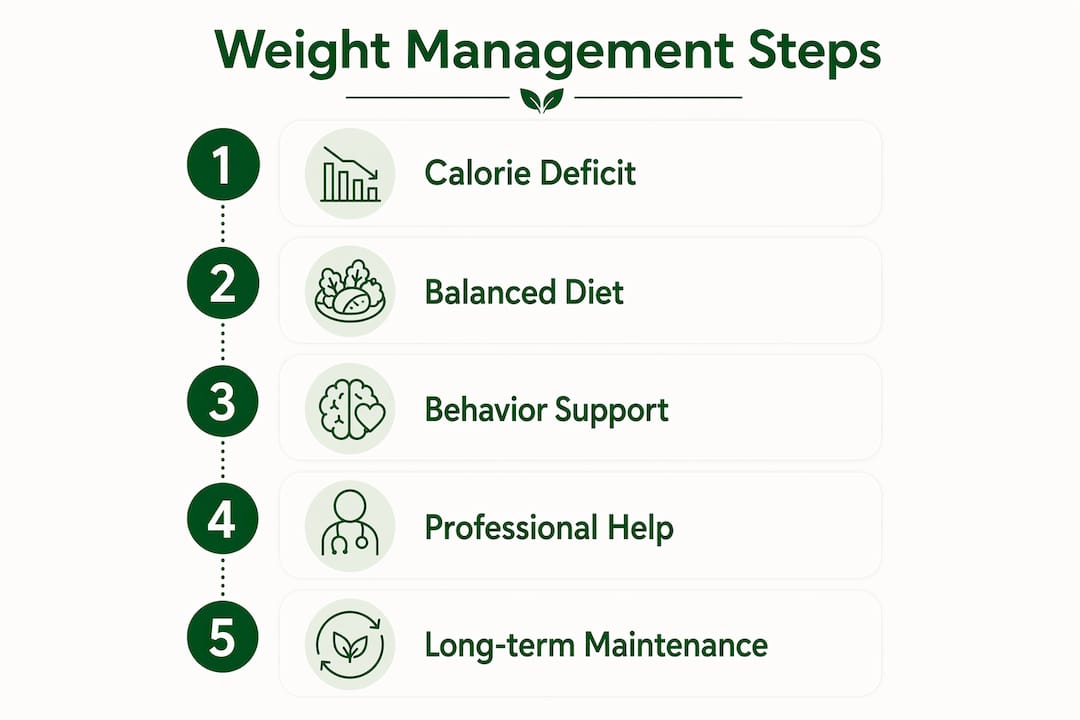
Sample day (approximately 1,500–1,600 calories):
Breakfast: Two scrambled eggs with spinach and one slice of whole-grain toast. Black coffee or unsweetened tea. This higher-protein start reduces mid-morning hunger.
Lunch: Large salad with mixed greens, grilled chicken breast (4 oz), cherry tomatoes, cucumber, half an avocado, and two tablespoons of olive oil and lemon dressing. One piece of fruit.
Snack: Plain Greek yogurt (5–6 oz) with a small handful of berries.
Dinner: Baked salmon (4–5 oz), roasted broccoli and sweet potato, drizzled with olive oil. Water or sparkling water.
Calorie-smart swaps:
| Higher-calorie option | Lower-calorie swap | Approximate calorie difference |
|---|---|---|
| White rice (1 cup, cooked) | Cauliflower rice (1 cup) | approximately 160 calories saved |
| Regular soda (12 oz) | Sparkling water with lemon | approximately 120 calories saved |
| Potato chips (1 oz bag) | Air-popped popcorn (3 cups) | approximately 80 calories saved |
| Creamy salad dressing (2 tbsp) | Olive oil and vinegar (1 tbsp each) | ~60 calories saved |
| Whole milk (1 cup) | Unsweetened almond milk (1 cup) | approximately 80 calories saved |
Implementation checklist:
CDC practical tips support using frozen and canned produce when fresh is not available or affordable. Nutritional value is comparable, and cost is lower, which removes a common adherence barrier.
Most people who lose weight regain a significant portion within two to five years. This is not a willpower problem. It is a predictable physiological and behavioral pattern with identifiable causes and addressable strategies.
The two main drivers of regain:
Metabolic adaptation means your body burns fewer calories at rest after weight loss than it did at the same weight before you lost it. This is a documented phenomenon: calorie needs fall as you lose pounds, so the eating plan that produced weight loss will eventually produce weight maintenance, and then weight regain if intake creeps back up. Successful maintenance often requires re-calibrating calorie targets rather than returning to pre-weight-loss intake. This is one of the most common practical oversights in long-term weight management.
Behavioral drift is the second driver. Monitoring frequency drops, meal planning becomes less consistent, and old food environments reassert themselves. The structure that supported weight loss quietly disappears.
Evidence-based maintenance strategies:
The sustainable weight loss research is consistent on one point: people who maintain weight loss long-term treat it as an ongoing practice, not a completed project.
Self-directed approaches work for many people, especially for modest weight loss with no comorbidities. But there are clear signals that professional involvement will meaningfully improve your outcomes.
Signs that warrant professional evaluation:
How to choose the right professional or program:
Questions to ask during a first contact:
Choosing a program that respects your autonomy and adjusts to your circumstances is not a luxury. It is a predictor of whether you will still be following the plan six months from now. The Weight Loss Consumer Bill of Rights offers a useful framework for evaluating any program or provider before you commit.
The strongest outcomes in obesity management come from combining dietary intervention with behavioral support, and, when appropriate, pharmacotherapy or surgical care. Here is how that coordination looks in practice.
An anonymized integrated-care workflow:
A 44-year-old with a BMI of 33 and prediabetes completes an initial virtual assessment covering dietary history, activity level, sleep, and metabolic labs. An RDN builds a personalized MNT plan targeting a 500-calorie daily deficit, emphasizing higher protein and fiber, and using the plate method as a daily structure. The prescribing clinician initiates a GLP-1 receptor agonist, with the RDN adjusting the meal plan to account for reduced appetite and the need to prioritize protein at smaller meals. Remote check-ins every two weeks track weight trend, lab values, and adherence. At three months, a 7% reduction in body weight and normalization of fasting glucose are documented. The RDN re-calibrates calorie targets and shifts focus to maintenance behaviors.
Combined approaches that integrate dietary counseling, behavioral support, and pharmacotherapy consistently show greater cardiometabolic and weight outcomes than any single intervention alone. The Academy of Nutrition and Dietetics recommends individualized, client-centered MNT as a core component of obesity management, not an add-on.
What the evidence supports in integrated care:
This article is general health information, not medical advice. Consult a licensed clinician or registered dietitian for guidance specific to your health history and circumstances.
Nutrition is the primary modifiable driver of weight change, and a sustainable calorie deficit, not a perfect macronutrient ratio, is what determines long-term success.
| Point | Details |
|---|---|
| Calorie deficit drives weight loss | A daily deficit of roughly 500 calories produces the clinically recommended 1–2 lb of loss per week. |
| Clinical targets are concrete | Aim for 5–10% body weight reduction within six months; this level of loss produces measurable health benefits. |
| Diet type matters less than adherence | Low-carb, low-fat, Mediterranean, and high-protein patterns produce similar long-term results when calorie deficit and adherence are comparable. |
| Maintenance requires recalibration | After weight loss, calorie needs fall; returning to pre-loss intake levels leads to regain. Adjust targets as your weight changes. |
| FitRx offers coordinated support | FitRx combines virtual clinician consultations, personalized nutrition guidance, and weight-loss medications for adults who want integrated, evidence-based care. |
Most people who come to a clinician for weight management have already tried several diets. They know what a vegetable is. What they usually need is not more information but a different relationship with the process itself.
The conventional framing of weight loss as a discipline problem, something you either have the willpower to do or you don’t, is both inaccurate and counterproductive. Metabolic adaptation is real. Appetite hormones shift after weight loss in ways that make hunger feel more urgent, not less. Acknowledging that reality with a patient changes the conversation from “try harder” to “here is what your body is doing, and here is how we work with it.”
What gets underestimated consistently is the value of structure over restriction. Clients who build a predictable meal pattern, even an imperfect one, tend to do better than those chasing the optimal macronutrient split. A higher-protein breakfast eaten at roughly the same time each morning does more for appetite control across the day than any specific food rule. Planned meals reduce the number of decisions you make under stress or time pressure, which is when the worst choices happen.
The other thing worth saying plainly: setbacks are part of the process, not evidence that the process has failed. A week of poor eating after a vacation or a stressful month does not erase months of progress. The clients who maintain weight loss long-term are not the ones who never slip. They are the ones who return to their structure quickly, without extended self-recrimination, and keep the monitoring habits that let them catch drift early.
If you are considering professional support, shared decision-making with a clinician who listens to your preferences, constraints, and goals will produce a better plan than any generic protocol. The evidence for individualized MNT is strong precisely because one-size-fits-all advice fails most people most of the time.
For readers who want more than a self-directed plan, FitRx offers a concrete alternative: a virtual evaluation with a licensed clinician, a personalized weight-management plan that incorporates nutrition guidance, activity recommendations, and sleep support, and, where appropriate, access to prescription weight-loss medications shipped directly to your home.

What makes this different from a generic telehealth visit is the coordination. Nutrition guidance, behavioral support, and medication management are handled together rather than in separate silos. You get a plan that accounts for your labs, your lifestyle, and your goals, with ongoing support through the app as your needs change.
If you have been wondering whether a weight-loss injection or medication might be right for your situation, find out with a quick assessment that connects you with a licensed provider. No long waits, no referral maze. Just a clear next step toward a plan that fits you.
The resources below are the primary references behind this article. Each is worth bookmarking if you want to go deeper on a specific topic.
| Source | What it covers |
|---|---|
| NIDDK: Eating & Physical Activity | Core U.S. guidance on energy balance, sustainable eating, and metabolic adaptation |
| NIDDK: Choosing a Safe Weight-Loss Program | Clinical benchmarks for safe weight-loss rates and program evaluation criteria |
| NIDDK: Game Plan to Prevent Type 2 Diabetes | DPP evidence on modest weight loss and diabetes prevention |
| CDC: Healthy Eating Tips | Practical nutrient-dense pattern guidance; cautions against food-group elimination |
| CDC: Tips for Healthy Eating for a Healthy Weight | Plate method, portioning, and practical shopping and prep tactics |
| StatPearls/PMC: Optimal Diet Strategies | Systematic review of macronutrient-focused diets and adherence evidence |
| Academy of Nutrition and Dietetics: MNT Guideline | Evidence-based practice guideline for RDN-delivered MNT in overweight and obesity |
| DIRECT Trial (NEJM) | Trial evidence that adherence, not macronutrient composition, predicts weight-loss outcomes |
| Harvard Health: Calorie Deficit Explained | RDN-sourced explanation of safe calorie deficits, muscle preservation, and common pitfalls |
| FitRx: Sustainable Weight Loss | Evidence-based overview of sustainable weight loss and behavioral strategies |

.svg)