Yes, most people can and should exercise while on semaglutide. The priority is resistance training two to three times a week to protect muscle, paired with regular aerobic activity for fitness and long-term weight maintenance. Start light during dose titration, and check with your prescriber first if you’re also taking insulin or dealing with severe nausea or dizziness.
TL;DR:
- Resistance training at 65% of one-rep max, two to three times weekly, effectively preserves muscle mass during rapid weight loss from semaglutide.
- Starting with light sessions and monitoring objective progress, such as reps and strength tests, helps safely increase workout intensity and volume.
- Nausea and low energy typically subside after 8 to 24 weeks, but exercise still promotes better long-term weight maintenance and muscle retention.
- Short, frequent resistance and aerobic sessions are effective, especially for those managing joint limitations or experiencing appetite suppression.
- Tailored, supervised exercise programs enhance results and help prevent lean mass loss compared to generic advice or advice-only approaches.
The CDC’s physical activity guidelines set the floor for adults at 150 minutes of moderate aerobic activity a week (or 75 minutes vigorous), plus strength training on two or more days. If your goal is faster fat loss on semaglutide, scaling toward 300 minutes a week of combined activity tends to produce better results. The resistance training piece matters more than most people realize.
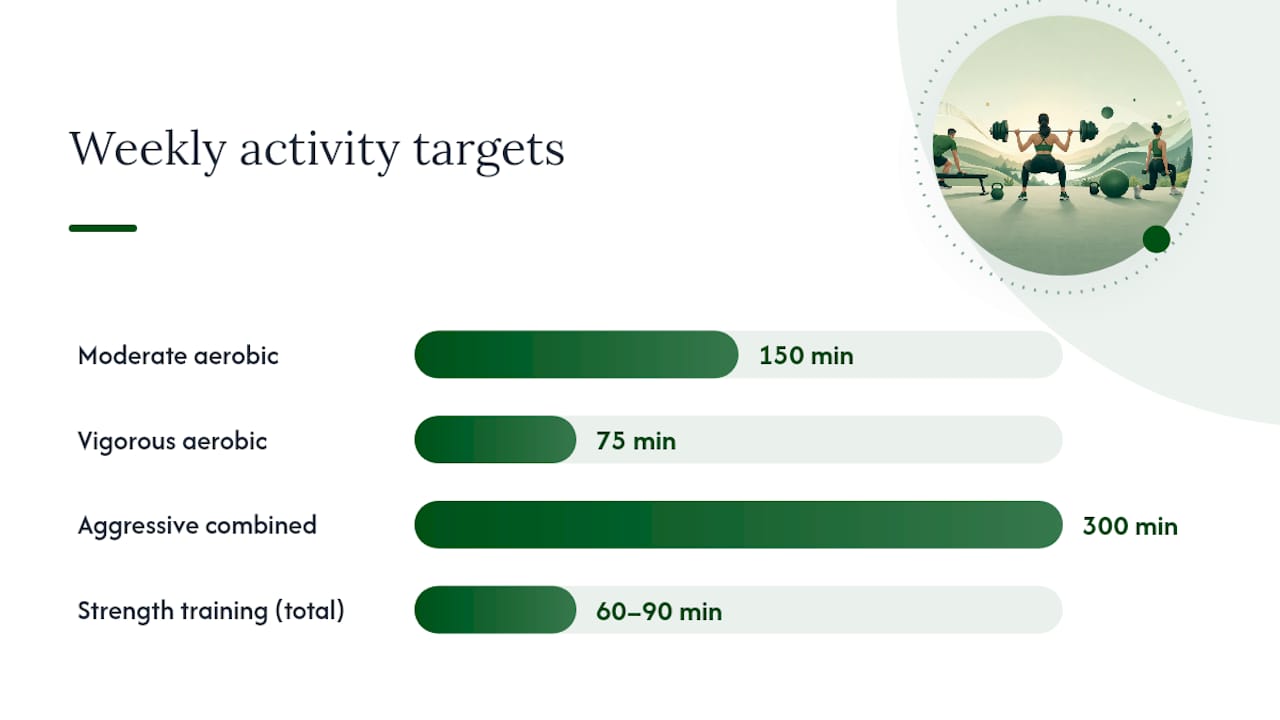
Resistance training, 2 to 3 times a week, 20 to 30 minutes a session (60 to 90 minutes total weekly). You don’t need a gym membership. Resistance bands, dumbbells, or straight bodyweight work (squats, push ups, rows) all count. The goal is progressive overload, meaning you gradually increase the challenge. A common benchmark used in exercise science is training around 65% of your one-rep max, which for most people feels like a weight you could lift 12 to 15 times before struggling.
Here’s a simple three-day split to start with:
If you’re new to exercise, older, or managing joint limitations, break sessions into smaller chunks. Three 10-minute walks accumulate the same benefit as one 30-minute walk, and shorter resistance circuits (10 minutes, twice a day) work just as well for building the habit.
Pro Tip: Track reps you can reliably perform, not just weight on the bar. If you did three sets of 10 push ups last week and can now do three sets of 12, that’s real progress, even if nothing else changed.
Semaglutide slows gastric emptying and suppresses appetite, which is exactly how it produces such dramatic weight loss results. In the STEP-1 trial, participants taking semaglutide alongside lifestyle counseling lost close to 15% of body weight over 68 weeks, compared to under 3% for lifestyle changes alone. That’s a massive difference, but it comes with a catch.
Rapid, medication-driven weight loss pulls from both fat and lean tissue. Without a deliberate strength stimulus, a meaningful share of what comes off the scale is muscle, not fat.
That’s the core reason the Frontiers in Endocrinology review on incretin mimetics pushes so hard for personalized, supervised exercise programs rather than generic “move more” advice. Resistance training performed at roughly 65% of one-rep max, done consistently, blunts that lean mass loss and can improve strength and muscle quality even while the number on the scale drops.
The appetite suppression and slower digestion also mean less fuel available for hard efforts, especially in the first weeks after starting or increasing a dose. Nausea and low energy cluster in that 4 to 8 week titration window. Most people find their energy for workouts stabilizes somewhere between 8 and 24 weeks, once the body adjusts to a given dose.
One striking data point on why this matters long-term: people who kept up supervised exercise after stopping weight-loss medication regained about 2.5 kilograms over the following year, compared with 6 kilograms for those who didn’t exercise, according to a New Scientist summary of the underlying research. A secondary analysis published in Sports Medicine backs this up from a different angle: exercise, alone or combined with a GLP-1 drug, improved cardiorespiratory fitness and physical function more than medication by itself. The drug shrinks the number on the scale. Exercise decides what kind of body you end up with.
Getting the logistics right matters as much as the workout itself, especially since nausea and appetite loss can throw off your normal eating pattern.
Pro Tip: If nausea hits mid-workout, don’t push through it. Split the session into two shorter bouts, add a walk break, or swap the planned intensity for a slower pace that day. Consistency over months beats any single hard session.
A useful rule of thumb: increase volume or intensity by roughly 10% a week, and only once your current level feels manageable, not exhausting.
Checking timelines for when GI side effects typically ease can help you set realistic expectations. Our breakdown of how long semaglutide takes to work covers that titration window in more detail.
The conventional wisdom around semaglutide treats exercise as optional, a nice bonus for people who happen to like the gym. That framing gets it backwards. The drug is genuinely powerful at suppressing appetite and driving down calorie intake, but it has no mechanism for telling your body which tissue to burn. Left unmanaged, a chunk of that weight loss is muscle, and muscle is the tissue that determines your metabolic rate, your strength as you age, and whether you keep the weight off once treatment ends.
What gets underestimated is how little exercise it actually takes to change that outcome. This isn’t about training like an athlete. It’s two or three short resistance sessions a week, done consistently, through the exact months when the drug is doing the most work. The evidence on supervised programs versus advice-only approaches is consistent: people who get structure and accountability keep it up longer and end up with better outcomes than people handed a pamphlet and sent home. That’s not a knock on willpower. It’s just how behavior change works.
If there’s one thing I’d push back on, it’s the idea that side effects mean you should wait to start exercising until you “feel ready.” Waiting often means losing the muscle you can’t get back without real effort later. Start small, adjust for symptoms, and treat resistance training as part of the treatment plan itself.
— Bryan
Personalized telehealth services offer licensed providers who can adjust your plan when a dose change or a rough side-effect week throws off your routine. Instead of guessing how hard to push during titration, you get ongoing guidance built around your treatment, not a generic fitness template.

FitRx’s approach pairs personalized semaglutide treatment with nutrition and activity coaching delivered through the app, so protein targets, workout pacing, and symptom check-ins happen in one place instead of three different apps that don’t talk to each other. Medication can ship to your door, and support may continue between visits, not just at the appointment. If you’re weighing whether semaglutide fits your goals, or you’re already on it and want your exercise plan to actually match your treatment, find out if weight loss injections could be right for you and get a plan built around your body, not a stock routine.
This article is general information, not a substitute for advice from a qualified doctor. Consult a qualified healthcare professional about your own circumstances before acting on anything here.
Yes. Most people benefit from combining semaglutide with regular exercise, particularly resistance training, which helps preserve muscle during rapid weight loss and improves fitness beyond what the medication alone provides.
You generally can, but scale intensity down during your first few weeks on a dose and for 24 to 48 hours after any dose increase, when nausea and fatigue are most likely to show up.
There’s no blanket exercise ban, but avoid pushing through severe nausea, dizziness, or symptoms of low blood sugar. Those warrant stopping the session and contacting your provider, especially if you’re also on insulin or a sulfonylurea.
Add resistance training two to three times a week alongside your aerobic activity, and get protein intake to roughly 1.2 to 1.6 grams per kilogram of body weight daily. Working with a provider through a program like FitRx’s semaglutide services can help you adjust the plan as your dose changes.

.svg)